


Buying kitchen cabinets online is an excellent way to save thousands of dollars on a home renovation, bypassing standard retail markups. However, ordering cabinetry through a screen instead of a physical showroom introduces unique hurdles. A single missed calculation or an overlooked shipping clause can turn a budget-friendly DIY project into an expensive headache.
If you are ordering cabinets online in Canada, here are five critical mistakes to avoid to ensure your delivery arrives exactly as intended.
Contact us today to get quick, transparent price estimate with competitive shipping rates across Canada.
The most common – and potentially devastating – mistake is taking a simple wall-to-wall measurement and assuming the cabinet boxes will just slide right in. Homes shift over time. A kitchen wall in an older home in Montreal or a farmhouse in rural Ontario is rarely perfectly square, plumb, or level.
The Real-World Pitfall: Imagine ordering a 36-inch base sink cabinet and a series of flanking units that add up perfectly to 120 inches on paper. When they arrive, you realize the drywall bows out by 1/2 inch in the middle of the run. Your 120 inches of cabinetry physically will not fit into the space, forcing a costly return or custom trimming modification.
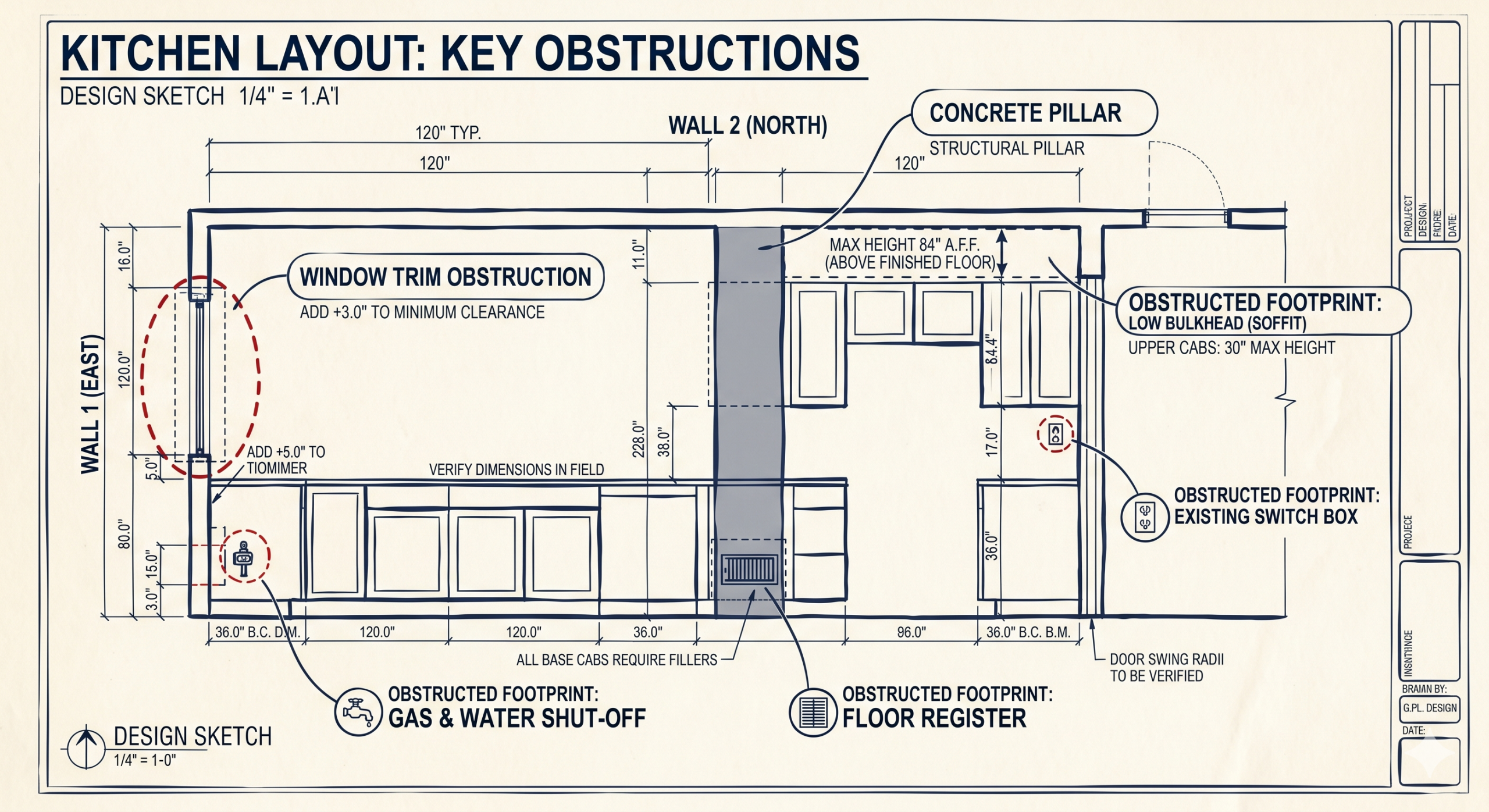
The Fix: Always measure your walls at three different heights: at the floor level, at countertop height (36 inches up), and at upper cabinet height (54 inches up). Use the smallest measurement of the three as your absolute maximum width. Furthermore, ensure you map out obstructed footprints such as window trim, radiator vents, baseboards, and appliance door-swing clearances.
Canada experiences extreme seasonal shifts, fluctuating from humid, hot summers to incredibly dry, sub-zero winters. This severe climate swing causes low-quality woods to expand and contract rapidly, ruining your layout over time.
The Real-World Pitfall: Homeowners looking to shave off costs might purchase cheap, unsealed particleboard cabinet boxes. Within a single winter-to-summer cycle, moisture from the sink or simple ambient humidity can cause unsealed particleboard to swell like a sponge, strip out its own hinge screws, and structurally fail.
The Fix: For cabinet boxes (the interior skeleton), look for 3/4-inch furniture-grade plywood or highly compressed, fully sealed High-Density Fiberboard (HDF). For painted door styles (like classic white Shaker doors), stable engineered materials like premium Medium-Density Fiberboard (MDF) are actually preferable to solid wood, as MDF will not warp or crack at the joints when your furnace kicks on in January. Take time to read online material specifications thoroughly or consult a brand’s Product and Materials FAQ page.
When ordering Ready-To-Assemble cabinetry online, your order will typically arrive via a third-party Less-Than-Truckload (LTL) freight carrier. These orders ship on large wooden pallets wrapped in plastic.
The Real-World Pitfall: The delivery driver pulls up to your curb in a rush, drops two massive pallets in your driveway, and hands you a Bill of Lading (BOL) to sign. You sign it quickly just to get them on their way. Two weeks later, when your contractor shows up to install the kitchen, you open the boxes and realize that a 24-inch pantry cabinet and three crown moldings are completely missing. Because you signed the delivery slip as “Received in Good Condition,” the online retailer and the freight company can deny your claim for replacements.
The Fix: Treating freight delivery like a casual Amazon drop-off is a major mistake. Before the driver leaves, you have the legal right to check the physical count. Count the total number of boxes against the packing slip. If anything is visibly crushed, punctured, or missing, write “DAMAGED” or “SHORT [Number of Boxes] MISSING” directly on the driver’s tablet or paperwork before signing. Most major Canadian e-tailers require structural damage claims to be filed within 10 days of delivery, so run a swift box audit immediately. Review the company’s Shipping and Delivery Policies for precise claim windows.
When you browse beautiful, pre-rendered kitchen displays online, you see a complete cohesive ecosystem. But online shopping carts require you to buy individual components, and it is remarkably easy to forget the functional pieces that bridge the gaps between your walls and your cabinet boxes.
The Real-World Pitfall: You buy your upper and lower boxes, attach them to the wall, and realize that when you try to open the drawer next to the wall, it scrapes against your door casing. Or worse, the exposed raw sides of your end-run cabinets show ugly unfinished plywood because you forgot to buy finished skin panels.
The Fix: Every kitchen layout requires trim accessories. Fillers (3-inch to 6-inch strips of finished wood) are vital to place between a cabinet and a wall so doors can open past 90 degrees without hitting walls or trim. You also need to add Toe Kicks (the black or matching finished strips that cover the raw legs at the bottom of base cabinets), Crown Molding for the tops of upper cabinets, and Finished End Panels for any exposed cabinet flanks.
Many DIYers assume that if they can sketch a kitchen on graph paper, they are ready to hit the “checkout” button on a multi-thousand-dollar order. However, cabinet architecture requires understanding technical spacing guidelines, appliance clearance zones, and optimal workflows.
The Real-World Pitfall: A homeowner lays out their dream kitchen online, buying a large drawer base directly next to a corner unit. Upon installation, they discover a fatal design flaw: when the dishwasher door is down, it completely blocks the trash pull-out drawer, rendering the kitchen layout frustratingly inefficient.
The Fix: Do not guess. Almost every reputable online cabinet distributor in Canada offers expert design assistance. Before finalizing an expensive order, utilize online design services to have a certified kitchen designer run your dimensions through a professional CAD program. They will check your appliance clearances, suggest proper filler widths, and ensure your layout honors functional workspace flow.

| Common Pitfall | The Real-World Risk | How to Evade It |
| Single-Point Measurements | Cabinets won’t fit due to unplumb, bowed, or uneven walls. | Measure at 3 distinct heights; use the absolute smallest dimension. |
| Cheap Cabinet Box Materials | Unsealed particleboard swells, warps, and drops hinges over time. | Insist on 3/4-inch plywood boxes or high-grade, fully sealed MDF/HDF. |
| Blind Freight Sign-Offs | Absorbing the cost of transit-damaged or missing items. | Inspect, count, and explicitly note damages/shortages on the BOL before signing. |
| Skipping Trim Accessories | Raw cabinet edges visible; drawers catching on walls or frames. | Budget for fillers, toe kicks, crown molding, and finished end skins. |
| DIY Layout Assumptions | Blind spots cause overlapping doors and poor kitchen flow. | Run your dimensions through a professional design review before purchasing. |
Don’t let hidden layout obstructions or calculation mistakes derail your kitchen renovation. Whether you are dealing with tricky window trims, uneven walls, or complex floor vents, you don’t have to figure it out alone.
Our team of expert Canadian design specialists is ready to help you map out your space perfectly—long before you hit the checkout button.
And don’t forget …
Ready to get started? Contact us today and let’s transform your space together!
I reached out to Canada Cabinets Online to get help designing a kitchen for our new cottage near Pictou, Nova Scotia. We had seen thier cabinets at a local store and liked the quality a lot, but didn’t know how to put it all together. Daniel McGarry contacted us to help with our design. He did a terrific job answering our many questions, tweaking the design based on our many changes, and being incredibly helpful. I do not know how we would have done this without him!!! Daniel was extremely good to work with and responded in a very timely fashion to our many emails. I would highly recommend working with Daniel to anyone who needs assistance.
Janet

